An online store does not launch when the design is finished. It launches when a stranger can find a product, understand price and delivery, pay safely, receive confirmation, collect the order, and return it without negotiating with three managers.
This plan is for a small Ukrainian brand or retailer launching 20–200 SKUs. It works with Shopify, WooCommerce, or a custom storefront, but does not assume technology will repair weak demand, margins, or fulfillment.
This is a practical roadmap, not legal or tax advice. Confirm KVED, tax regime, RRO/PRRO, licenses, and product-specific documents with an accountant.
The four systems behind a real store
Offer
Product, price, margin, stock, delivery promise, returns.
Store
Catalog, search, product page, cart, mobile checkout.
Money
Merchant, payment, PRRO, refund, reconciliation.
Orders
Inventory, delivery, messages, support, reporting.
Thirty days is realistic for a focused store on a proven platform, a small catalog, and one delivery geography. It is not realistic for a new brand, 2,000 SKUs, ERP, marketplace, loyalty program, three languages, and a custom mobile app at once.
How much does an online store cost in Ukraine?
| Scenario | Launch | Monthly before ads | Scope |
|---|---|---|---|
| Lean validation | UAH 20k–80k | UAH 2k–8k | Template, 20–50 SKUs, manual ops |
| Serious small store | UAH 100k–350k | UAH 8k–35k | Custom layer, integrations, automation |
| Complex commerce | UAH 500k–2m+ | UAH 40k–200k+ | ERP, custom rules, large catalog, team |
These are planning ranges, not quotes. Stock, salaries, large-scale photography, warehousing, and advertising are separate. Allocate roughly 10–20% to discovery/content structure, 35–50% design/development, 10–20% integrations, 15–25% product content, and 10–15% QA/contingency.
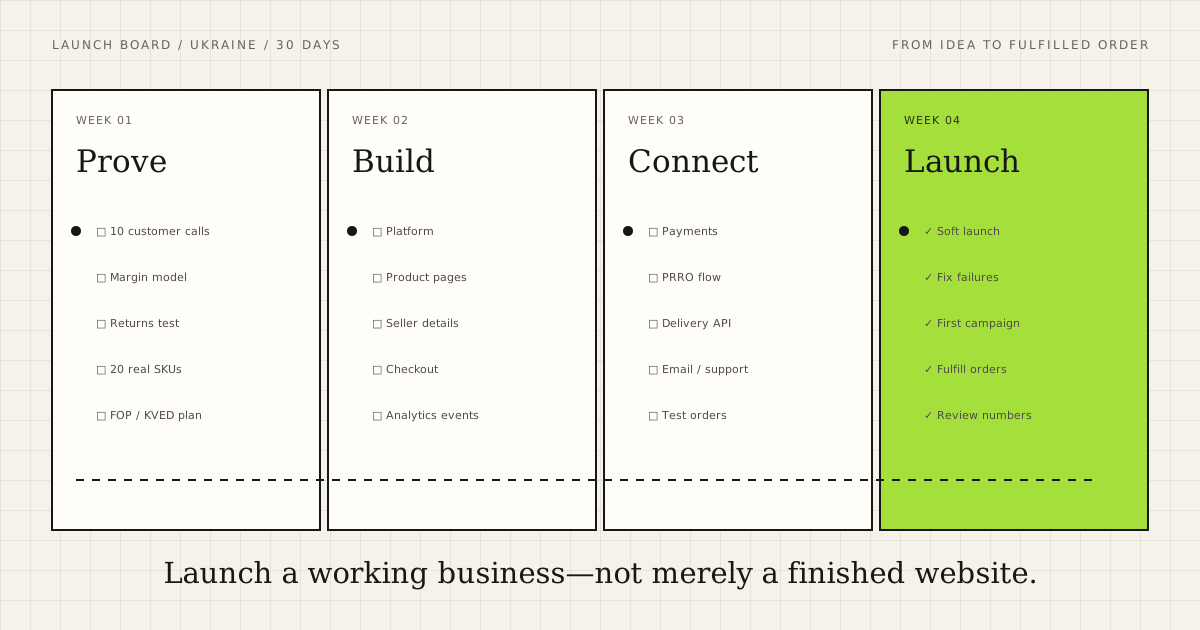
Week 1: prove the product can sell
Interview ten people who buy the category. Ask about their latest purchase—where they searched, compared, hesitated, and why they trusted the seller. Select 20–50 hero SKUs, calculate contribution margin, choose a stock source of truth, define delivery and returns, and complete five manual sales before automating.
Contribution/order = revenue − COGS − payment fee − packaging − delivery subsidy − expected returns − variable support. ROAS cannot rescue a negative order.
FOP, KVED, and the information customers must see
FOP registration is available online and free through Diia. Internet retail commonly uses KVED 47.91, but the assortment may require more activities, permits, or licenses. Do not copy another seller's setup without accounting advice.
Article 7 of Ukraine's ecommerce law requires stable access to seller identity, address, contact/store address, identifier, license details where applicable, tax inclusion, and delivery cost information. Build clear seller/contact, payment and delivery, returns, privacy, terms, and product pages.
Consumer exchange/return rights have conditions and statutory exceptions. A “no returns” footer does not create new law. Define request, eligibility, return address, inspection, refund, and stock update.
Week 2: build the smallest useful store
Shopify is a strong managed default; WooCommerce fits WordPress/content/control with a technical owner; custom is justified only by proven unique logic. An MVP needs home, category, product, cart, checkout, confirmation, seller/legal pages, mobile navigation, and support. Loyalty points, AI chat, and advanced accounts can wait.
Each hero product needs buyer outcomes, exact specifications, sizing/compatibility, honest images, stock, delivery date, returns/warranty, and FAQs from actual conversations. Normalize attributes and filters; assign one catalog owner.
Week 3: connect payments, delivery, and messages
Ukrainian merchants often shortlist LiqPay, plata by mono, WayForPay, and Fondy. Compare foreign cards, recurring/hold/refund, settlement, PRRO, acceptance rate, and accounting—not only fees. Stripe still does not offer direct merchant accounts to Ukraine-registered companies as of August 2026.
Delivery should create shipments from orders, validate destinations, save tracking, notify customers, and process returns. Prepare transactional messages for received, paid/failed, shipped, pickup, delivery issue, return, and refund.
Where required, card payments need RRO/PRRO; a gateway receipt does not replace the seller's fiscal receipt. Keep received, paid, fiscalized, fulfilled, and refunded as distinct states.
Week 4: soft-launch before advertising
Invite 20–30 target customers and complete ten end-to-end orders across iPhone, Android, desktop, guest, foreign-card tests where relevant, delivery types, failed payment, duplicate submit, cancellation, refund, fiscal receipt, pickup, and return. Then launch a small campaign to one or two product/category pages. Advertising scales bugs as efficiently as orders.
First-month analytics
Track view_item, add_to_cart, begin_checkout, shipping/payment info, purchase, and refund. Purchase fires once after confirmation and contains no PII.
| Metric | Explains | Does not prove alone |
|---|---|---|
| Conversion | Sessions that buy | Profitability or traffic quality |
| Contribution/order | Money after variable costs | Full P&L |
| Checkout completion | Intent becoming purchase | Why abandonment happens |
| Return rate | Product/expectation fit | Cause without reason codes |
Seven expensive mistakes
- Building before validation.
- Importing the entire weak catalog.
- Starting custom without proven need.
- Hiding the seller and terms.
- Testing only successful payment.
- Having no catalog/inventory owner.
- Buying traffic before end-to-end QA.
The 30-day launch plan
Launch only when ten test orders pass, seller details and policies are visible, payment/refund/fiscalization reconcile, stock cannot oversell silently, support owns exceptions, and dashboard totals match gateway and bank.
Frequently asked questions
How much does it cost to launch an online store in Ukraine?
Lean validation may cost UAH 20k–80k, a serious small store UAH 100k–350k, and complex commerce UAH 500k+. Inventory, salaries, and ads are separate.
Does an online store need a registered business?
Regular commercial activity must be structured appropriately. Small businesses often use FOP, available online through Diia; confirm the form and tax regime professionally.
Which KVED is used?
Internet retail commonly uses 47.91, but products may require additional KVEDs, permits, or licenses.
Which platform should a new store use?
Shopify for a managed default, WooCommerce for WordPress/content/control with technical ownership, custom for proven unique commerce logic.
Can a store launch in 30 days?
Yes with 20–200 SKUs, a proven platform, one geography, and clear ownership. ERP migrations and custom flows need longer.
Sources and review date
Reviewed August 16, 2026 using official guidance from Diia, State Statistics Service, Ukraine's ecommerce law, and the consumer protection authority. Verify product-specific requirements before launch.
Read next: choose a platform, choose online payments, and audit checkout.